Subordinate Judiciary

Articles 233 to 237 in Part VI of the Constitution make the following provisions to regulate the organization of subordinate courts and to ensure their independence from the executive . Articles 233 to 237 in Part VI of the Constitution make the following provisions to regulate the organization of subordinate courts and to ensure their independence from the executive .

The framework  of the  current  legal  system has been  laid  down by the  Indian  Constitution  , which states for an integrated and uniform judiciary system and  the judicial  system  derives  its  powers  from  it.  There  are  various  levels  of  judiciary  in  India— different  types  of  courts,  each  with  varying  powers  depending  on  the  tier  and  jurisdiction bestowed upon them. They form a hierarchy of importance, in line with the order of courts in which they sit, with the Supreme Court of India at the top, followed by High Courts of respective states with District Judges sitting in District Courts and Magistrates of Second Class and Civil Judge (Junior Division) at the bottom.

Type of cases

  • Civil cases pertain to disputes between two or more persons regarding property, breach of agreement or contract, divorce or landlord – tenant disputes. Civil Courts settle these disputes. They do not award any punishment as violation of law is not involved in civil cases.
  • Criminal cases relate to violation of laws. These cases involve theft, dacoity, rape, pickpocketing, physical assault, murder, etc. These cases are filed in the lower court by the police, on behalf of the state, againt the accused. In such cases the accused, if found guilty, is awarded punishment like fine, imprisonment or even death sentence.
  • Revenue cases relate to land revenue on agriculture land in the district.

317EL15_Page_5

The District Courts of India are presided over by a judge. They administer justice in India at a district level. These courts are under administrative and judicial control of the High Court of the State to which the district concerned belongs.

       The highest court in each district is that of the District and Sessions Judge. This is the principal court of civil jurisdiction. This is also a court of Sessions. Sessions-triable cases are tried by the Sessions Court. It has the power to impose any sentence including capital punishment.

       There are many other courts subordinate to the court of District and Sessions Judge. There is a three tier system of courts. On the civil side, at the lowest level is the court of Civil Judge (Junior Division). On criminal side the lowest court is that of the Judicial Magistrate. Civil Judge (Junior Division) decides civil cases of small pecuniary stake. Judicial Magistrates decide criminal cases which are punishable with imprisonment of up to five years.

       At the middle of the hierarchy there is the Court of Civil Judge (Senior Division) on the civil side and the Court of the Chief Judicial Magistrate on the Criminal side. Civil Judge (senior division) can decide civil cases of any valuation. There are many additional courts of Additional Civil Judge (senior division).The Jurisdiction of these addition courts is the same as that of the principal court of Civil Judge (Senior Division). The Chief Judicial Magistrate can try cases which are punishable with imprisonment for a term up to seven years. Usually there are many additional courts of Additional Chief Judicial Magistrates. At the top level there may be one or more courts of additional district and sessions judge with the same judicial power as that of the District and Sessions judge.

POVERTY


  • Following elements mainly affect the magnitude of the poverty ration
    • The nutrition norm in the base year
    • Price deflator used to update the poverty line
    • Pro rata adjustment in the number of households in different expenditure classes to determine the number of households below and above poverty line.
  • Agricultural wage earners, small and marginal farmers and casual workers engaged in non-agricultural activities constitute the bulk of the rural poor

Read more

Nanda dynasty

Nanda dynasty

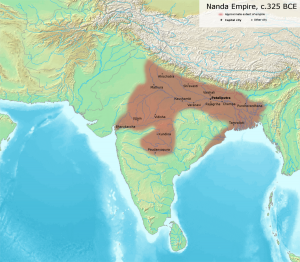
Nanda dynasty, family that ruled Magadha, in northern India, between c. 343 and 321 BCE. The Nanda dynasty immediately preceded the dynasty of the Mauryas, and, as with all pre-Maurya dynasties, what is known about it is a mixture of fact and legend. Indigenous traditions, both Brahmanical and Jaina, suggest that the founder of the dynasty, Mahapadma (who was also known as Mahapadmapati, or Ugrasena), evidently had a low social origin—a fact confirmed by classical scholarship. Mahapadma took over from the Shaishunagas not only the reins of Magadhan power but also their policy of systematic expansion. His probable frontier origin and early career as an adventurer helped him to consolidate the empire with ruthless conquests. The authenticity of the Puranic statement that he was the “destroyer of all Kshatriyas” and that he overthrew such disparately located powers as the Ikshvakus, Pancalas, Kashis, Haihayas, Kalingas, Ashmakas, Kurus, Maithilas, Shurasenas, and Vitihotras is borne out by independent evidence, which also associated the Nandas with conquests in the distant Godavari River valley, Kalinga, and part of Mysore.

Foundation of Nanda Dynasty

Maha­padma Nanda, the founder of the Nanda dynasty, proved to be a powerful ruler. From both the Buddhist and Jain sources we come to know that he belonged to very low family. Probably, he was born of a Sudra mother, as the Buddhist sources would inform us. Whatever may be the origin of this man, it is quite certain that he greatly extended the boundaries of the Magadhan Empire. He is said to have uprooted all the Kshatriya ruling dynasties of Northern India like the Panchalas, Kurus, Asmakas, Ikshvakus and Surasenas, etc., and annexed their states.

After Mahapadma Nanda his eight sons divided the whole empire among them and ruled simultaneously for twelve years from different centers. Nothing definite and in detail is known about them except that when Alexander invaded India in 326 B.C. Magadha was ruled by Dhana Nanda who was known all around for his immense wealth and powerful army. According to the Greek writers the army of the Nandas consisted of 20,00,000 infantry, 20,000 cavalry, 2,000 four-horsed charioteers and 30,000 elephants. From the Buddhist texts we come to know that the Nandas were very fond of wealth and had become very unpopular because of their heavy taxes and undue exaction from the public.  It was because of this that people deserted them and helped Chandragupta Maurya when the latter attacked Magadha in about 323-322 B.C.

Dhana Nanda

Dhana Nanda was the last king of Nanda Empire. He was one among the nine sons of Mahapadma Nanda. He was called Dhana Nanda for his love of hoarding wealth, the last Nanda was called Dhana Nanda.

King Dhana Nanda inherited the vast empire of his father. The army of Emperor Dhana Nanda consisted of large number of cavalry, infantry, chariots and elephants. When Alexander the Great invaded India, the ruler of Magadha Empire was Dhana Nanda. Alexander and his army heard the glory of the army of Nanda Empire. The Macedonian army was so frightened that the they refused to move ahead to face the huge army of Magadha Empire.

Apart from his vast empire and great army, Dhana Nanda amassed huge wealth. He was huge mass of gold reserves. It is said that he built his treasure house by causing a great excavation in a rock in the bed of the Ganges. He gathered wealth by levying taxes on skins, stones and various articles.

The revolution which brought the end of the Nandas was not a bloodless revolution. There was violent encounter between the Nanda army led by general Bhaddasala and the army of Chandragupta in which the latter became victorious. The fall of the Nandas paved the way for the rise of the Maurya Empire.

The Nanda Empire was extended upto Kalinga. The southern frontier of the Nanda Empire did not limit itself to Kalinga. It extended over to the Asmaka country in the Godavari valley in Deccan.  Whether the Nanda Empire extended still further beyond the Krishna, is not definitely known. But the discovery of Asokan edicts in Kurnool and Chitaldrug districts point to the extension of the Magadhan Empire up to the south of the Krishna. Since Asoka was not responsible for the conquest of these areas, it is inferred that the credit of the conquest of the area must go either to the first Maurya or the first Nanda.

Several Mysore inscriptions of later date refer to the inclusion of the Kuntala lying to the south of Mumbai within the Nanda Empire. But the validity of the information is doubtful.

Significance of Nanda Empire

The Nanda Kings established a strong monarchy based on an efficient bureaucracy and a mighty army. The conquests made by the Nandas paved the way for the political unification of India under the Mauryas. The age of the Nanda Empire was significant also for the fact that it brought an end to the immemorial orthodox tradition of the divine right of the Kshatriyas to hold the royal power.  Mahapadma Nanda was the founder of Nanda Empire. It is believed that his mother was a Shudra. The new ruler Mahapadma Nanda was a representative of inferior Sudra caste and a “destroyer of Kshatriyas”. He was a product of the prevailing spirit of revolt against all conservative traditions both in religion and politics.

If Buddhism and Jainism challenged the orthodox Brahmanical religion, the rise of a Sudra chief named Mahapadma Nanda on the throne of Magadha signified a spirit of revolt against traditional Kshatriya domination.  The Nandas built canals and irrigation projects for increasing the fertility of the land. Magadha was prosperous for iron ores which she could steadily get from her mines. The vast army of the Nandas could be well equipped with suitable weapons due to abundance of iron supply. The agriculturists could get plough shears and implements.

Biomes and Its types

Biome

The terrestrial part of the biosphere is divisible into enormous regions called biomes, which are characterized, by climate, vegetation, animal life and general soil type.

No two biomes are alike.

The most important climatic factors are temperature and precipitation.

  1. Tundra- Northern most region  adjoining the ice bound  poles. Devoid of trees except stunted shrubs in the southern part of tundra biome, ground flora includes lichen, mosses and sedges.

The typical animals are reindeer, arctic fox polar bear, snowy owl, lemming, arctic hare,  ptarmigan. Reptiles and amphibians are almost absent


  1. Taiga- Northern Europe, Asia and North America. Moderate temperature than tundra. Also known as boreal forest.

The dominating vegetation is coniferous evergreen mostly spruce, with some pine and firs. The fauna consists of small seed eating birds, hawks, fur bearing carnivores, little mink, elks, puma, Siberian tiger, wolverine, wolves etc.


  1. Temperate Deciduous Forest- Extends over Central and Southern Europe, Eastern North America, Western China, Japan, New Zealand etc.

Moderate average temperature and abundant  rainfall. These are generally the  most  productive agricultural areas of the earth The flora includes trees like beech, oak, maple and cherry. Most animals are the familiar vertebrates and invertebrates.

  1. Tropical rain forest- Tropical areas  in  the equatorial regions, which is  a bound  with  life.  Temperature and rainfall high.

Tropical rainforest covers about 7% of the earth’s surface & 40% of the world’s plant and animal species.

Multiple storey of broad-leafed evergreen tree species are in abundance.

Most animals and epiphytic plants(An epiphyte is a plant that grows harmlessly upon another plant)  are concentrated in the canopy or tree top zones

  1. Savannah- Tropical region: Savannah is most extensive in Africa

Grasses with scattered trees and fire resisting thorny shrubs.

The fauna include a great diversity of grazers and browsers such as antelopes, buffaloes, zebras, elephants and rhinoceros;  the carnivores include lion, cheetah, hyena; and mongoose, and many rodents


  1. Grassland- North America, Ukraine, etc . Dominated by grasses. Temperate conditions with rather low rainfall. Grasses dominate the vegetation. The fauna include large herbivores like bison, antelope, cattle, rodents, prairie dog, wolves, and a rich and diverse array of ground nesting bird


  1. Desert- Continental interiors with very low and sporadic rainfall with low humidity. The days are very hot but nights are cold. The flora is drought resistance vegetation such as cactus, euphorbias, sagebrush. Fauna : Reptiles, Mammals and birds.

08.02.18 Arunachal Pradesh(APPSC) Current Affairs

NORTH-EASTERN STATES


  • Prime Minister Narendra Modi to address elections rallies at Sonamura & Kailasahar in Tripura


  • Prime Minister Narendra Modi will address rallies at Sonamurain Sipahijala districtand Kailasahar in Unakoti district.
  • Assam Chief Minister and BJP leader Sarbanand Sonowal addressed public meetings in Teliamura and Majlishpur yesterday.
  • Assam’s former Chief Minister and Congress leader Tarun Gogoi campaigned in Badarghat constituency.
  • Tripura Chief Minister Manik Sarkar addressed rallies in Kumar ghat and Kailasahar of Unakoti district. The state will go to polls on the 18th of this month to elect a new assembly.
  • Prime Minister Narendra Modi will be addressing rallies in Sonamura of Sipahijala and Kailasahar of Kailasahar districts. In view of PM’s rally, the security arrangement has been beefed up in the state.
  • Also, yesterday addressing a rally in Teliamura, Assam’s Chief Minister Sarbanand Sonowal Prime Minister Narendra Modi wants to develop each and every state of the country.


INTERNATIONAL


·        Forbes Releases Its First-Ever Cryptocurrency Rich List


  • Business magazine Forbes released its first-ever Crypto Rich List, comprising 20 wealthiest peoplein the cryptocurrency space.
  • The list was topped by Ripple Co-founder Chris Larsen, who is estimated to have a crypto net worth of $7.5-8 billion.
  • He is followed by Ethereum Co-founder Joseph Lubin ($1-5 billion) and Founder of cryptocurrency exchange Binance Changpeng Zhao ($1.1-2 billion).


·        Bermuda Becomes first Country In World To Abolish Same-Sex Marriage


  • Bermuda becomes the first country to legalize and then repeal same-sex marriage.
  • Bermuda’s governor John Rankin approved a bill reversing the right of gay couples to marry, despite a supreme court ruling last year authorizing same-sex marriage.


NATIONAL


·        Google and NCERT Join Hands To Teach Students Digital Safety


  • Google and National Council of Educational Research and Training (NCERT)signed a pact to integrate a course on ‘Digital Citizenship and Safety’ in information and communication technology curriculum.
  • It was signed on the occasion of Safer Internet Day (06th February).
  • The curriculum developed by NCERT in collaboration with Google will be used to train students from class I – class XII across 1.4 million schools in India where they will learn how to become good and responsible digital citizens. The curriculum is spread into four themes – being smart, being safe, being a digital citizen and being future ready.


·        HAL Develops First Hawk-I Flight


  • The Hindustan Aeronautics Limited developed the first flight of Hawk-i with indigenous Real Time Operating System (RTOS).
  • Hawk-i is the first indigenous RTOS developed in India from scratch and certified by Center for Military Airworthiness and Certification (CEMILAC). 
  • The RTOSis the system software which provides a standard run-time environment for real-time applications execution in a safe and reliable manner.


·        Fifth South Asia Region Public Procurement Conference Held In New Delhi


  • The Fifth edition of South Asia Region Public Procurement Conferencewas held in New Delhi.
  • It was hosted by Public Procurement Division (PPD) of Ministry of Finance and All India Management Association (AIMA).
  • It was held under auspices of South Asia Region Public Procurement Network (SARPPN),which is sponsored and facilitated by the World Bank, Asian Development Bank, and Islamic Development Bank.
  • The theme this edition of the conference was “Public Procurement and Service Delivery”.


·        Union Cabinet approves implementation of PMRF scheme gives nod to enhance beneficiaries under Ujjwala Yojana from 5 to 8 crores


  • Union Cabinet approved implementation of Prime Minister’s Research Fellows (PMRF) schemeat a total cost of 1,650 crore rupees for a period of seven years beginning 2018-19. The scheme was announced in the Union Budget for 2018-19.
  • Under this scheme, the best students who have completed or are in the final year of B. Tech or Integrated M.Tech or M.Sc. in Science and Technology streams from IISc or IITs or NITs or IISERs or IIITs will be offered direct admission in the Ph.D. programme in the IITs or IISc.
  • Such students, who fulfill the eligibility criteria, and are shortlisted through a selection process, as laid down in the PMRF Guidelines, will be offered a fellowship of 70 thousand rupees per month for the first two years, 75 thousand rupees per month for the 3rd year and 80 thousand rupees per month in the 4th and 5th years.


·        Defence Ministry constitutes a 13-member advisory committee to expedite capital acquisition for Armed Forces modernisation


  • Defence Minister Nirmala Sitharamanconstituted a 13-member advisory committee to monitor and expedite capital acquisition projects for the modernization of the armed forces.
  • In a statement, the Ministry said, the committee will undertake an independent review and check the status of ongoing critical projects worth more than 500 crore rupees.
  • The panel will suggest measures to improve the capital acquisition process.
  • The committee, headed by Vinay Sheel Oberoi, will have to present an initial status report on identified projects to the Defence Minister by March 31.


  • Centre to link driving licence with Aadhaar


  • The Centre is in the process of linking driving licences with Aadhaar number to weed out fake licences and a software for this covering all states on a real time basis is under preparation, the Supreme Court was told.


  • A bench comprising Justices Madan B Lokur and Deepak Gupta was informed about it by a court-appointed committee on road safety headed by former Supreme Court judge Justice K S Radhakrishnan.


  • This assumes significance as a five-judge Constitution bench headed by Chief Justice Dipak Misra is currently hearing a clutch of petitions challenging the constitutional validity of the Aadhaar scheme and the enabling 2016 law.


  • ISRO sets up 473 Village Resource Centres for rural development


  • To demonstrate the potential of satellite technology for development of rural areas, ISRO established Village Resource Centres (VRCs) on a pilot scale, in association with selected NGOs, Trusts and State Government Departments.


  • VRCs have provided various space technology enabled services such as tele-healthcare, tele-education, natural resources information, advisories related to agriculture, career guidance to rural students, skill development and vocational training etc.


  • About Rs 18 crores was spent for establishing 473 VRCs.


·        Development of Solar Cities scheme: 60 Solar Cities to be developed

  • Ministry of New and Renewable Energy (MNRE)under its “Development of Solar Cities” scheme sanctioned the development of 60 Solar Cities including 13 Pilot and 5 Model Cities up to 12th Five-year Plan period (2012–2017).
  • So far, master plans of 49 Solar Cities have been prepared.
  • Under it, local Governments are motivated for adopting renewable energy technologies and energy efficiency measures.
  • Solar City developed under this scheme will have all types of renewable energy based projects like solar, wind, biomass, small hydro, waste to energy.

·        Nuclear-Capable Prithvi-II Missile Successfully Test-Fired

  • India successfully test-fired its indigenously developed nuclear capable Prithvi-II missile as part of a user trial by the Army from Integrated Test Range at Chandipur, in Odisha. It is a surface-to-surface missile and has a strike range of 350 km.
  • Prithvi-II is capable of carrying 500-1,000 kilogram of warheads and is thrust by liquid propulsion twin engines.
  • Inducted into the Armed forces of the country in 2003, the nine-meter-tall, single-stage liquid-fuelled Prithvi-II is the first missile to have been developed by the DRDO under the Integrated Guided Missile Development Programme (IGMDP).


  • Jhulan Goswami first female cricketer to take 200 ODI wickets


  • India’s veteran pacer Jhulan Goswami has added another feather to her illustrious cap by becoming the first female cricketer to take 200 ODI wickets.


  • Goswami achieved the feat during the second ODI between India and South Africa.


  • The 35-year-old, playing her 166th ODI, dismissed opener Laura Wolvaardt for her 200th scalp.


  • She was adjudged ICC Women Cricketer of the Year in 2007.


India’s action against Desertification

India as a signatory to United Nations Convention to Combat Desertification (UNCCD) has submitted four National Reports to UNCCD  in the years 2000, 2002, 2006 and 2010

Some of the major programmes currently implemented that address issues related to land degradation and desertification is:-

  1. Integrated Watershed Management Programme (IWMP),
  2. National Afforestation Programme (NAP),
  3. National Mission for Green India (GIM),
  4. The Mahatma Gandhi National Rural Employment Guarantee Scheme
  5. (MGNREGS),
  6. Soil Conservation in the Catchment of River Valley Project and Flood Prone River,
  7. National Watershed Development Project for Rainfed Areas (NWDPRA),
  8. Desert Development Programme (DDP)
  9. Fodder and Feed Development Scheme-component of Grassland Development including
  10. Grass Reserves, Command Area Development and Water Management (CADWM)  programme etc


Arunachal Pradesh Census


Population

As per details from Census 2011, Arunachal Pradesh has population of 13.84 Lakhs, an increase from figure of 10.98 Lakh in 2001 census. Total population of Arunachal Pradesh as per 2011 census is 1,383,727 of which male and female are 713,912 and 669,815 respectively. In 2001, total population was 1,097,968 in which males were 579,941 while females were 518,027.
papum pare has the highest population followed by changlang, lohit and west siang while Dibang Valley has the lowest population.

Density of Population

According to 2011 census, the population density in Arunachal Pradesh is only 17 people per sq km against the country’s 325. Higest density is in Papum Pare and Lowest in Dibang valley

Population Growth

The total population growth in this decade was 26.03 percent while in previous decade it was 26.21 percent. The population of Arunachal Pradesh forms 0.11 percent of India in 2011. In 2001, the figure was 0.11 percent.  Highest increase in Kurung Kamey and lowest in upper siang.

Literacy Rate

In 2011, Arunachal Pradesh had a literacy rate of 65.38 per cent . The male literacy was 72.55 per cent in Arunachal Pradesh while female literacy stands at 57.70 %.

Literacy is highest in Pamuppare and lowest in Kurung Kumey.

Sex Ratio

The overall sex ratio of Arunachal Pradesh is not comparable with that of other states because of a large migration. As we have seen before, 35.78 per cent of the population in Arunachal Pradesh belongs to general category most of whom are either migrants from other states or descendants of the migrants.

Sex Ratio of Arunachal Pradesh is 938. Sex Ratio is highest in kurung Kumey and is lowest in Tawang District. Child Sex Ratio of Arunachal Pradesh is 972 and is much higher than country’s average.

Rural-Urban Distribution

Urbanisation is relatively new in Arunachal Pradesh; prior to 1971 there was no urban population. In 1971 census, for the first time, four administrative centres were counted as urban. By 2001, there were 17 towns and 20.75 per cent of the population was urban. Papum Pare, the district in which the capital of the State is located, has the highest level of urbanisation, 50.85 per cent, and Upper Siang has no urbanisation at all.

Scheduled Tribes and General Category

In 1961, the ST category formed the overwhelming majority of the population (88.67 per cent), and the nonST only 11.33 per cent. The relative size of the non-ST category, however, increased in subsequent years. In 1991, this category became as high as 36.34 per cent of the total; in the 1990s its relative size, however, declined, reaching 35.78 per cent of the population in 2001.

The non-tribal population in Arunachal Pradesh is not evenly distributed; their presence is more in the urban than in the rural areas. Kurung Kumey, a hilly district with no urban areas, has the lowest percentage of the non-tribal population. At the other end is Lohit, a district with extensive plains bordering the Brahmaputra valley of Assam, has the highest concentration of the non-tribal population.


The Kushanas : Kanishka : Extent of empire, His religious policy; Development of Art, Architecture and Letters during the Kushana period

The Kushanas: Short introduction

In the early 2nd century BC, a tribe on the Central Asian frontier of China called Hsiung-nu defeated a neighboring one known as Yueh-chih. After more conflict, the survivors of the Yueh-chih were dislocated west, passing down the Ili river valley and along the southern shore of lake Issyk Kul. This movement also pushed Saka tribes (and others) ahead of them. Sometime between 145 and 125 BC, these nomad invaders burst into Bactria and Parthia. A generation later, they were pressing into the Kabul valley and onto the Punjab plain. At around the beginning of the Christian era, one of the five Yueh-chih chiefs, K’iu-tsiu-k’io, attacked and defeated the others, leaving his clan in control; the Kuei-shang (Kushans).

Kujula Kadphises (30-80 AD) established the Kushan dynasty in 78 AD by taking advantage of disunion in existing dynasty of Pahalava (Parthian) and Scytho-Parthians, and gradually wrested control of southern prosperous region, which is the northwest part of ancient India, traditionally known as Gandhara (now Pakistan). It was his grandson Vima Kadphises who made Kushan a paramount power of northern India. His reign saw emergence of Kushan empire when he conquored north-western India (modern Punjab). Soon he came under influence of Hinduism (most likley embraced it for good) and took opportunity to proclaim himself Mahishwara, another name for Lord Shiva, on his coins (Shiva is a prominent Hindu god). Kushan kings introduced gold and copper coins, a large number of them have survived till today. It was the Kushan emperor, Vima Kadaphises who introduced the first gold coins of india. Kushan empire covered north west of India (includes Pakistan and modern Afganistan) and northern India. Ample evidences of trade with China, cental Asia, Egypt and Rome are available which made their economy very strong and kingdom wealthy and prosperous.

Vima’s able son Kanishka (100 – 126 AD) followed and took control of this dynasty in 100 AD. Kanishka is the legendary ruler of ancient India and according to most historians the greatest ruler of Kushan dynasty. He and his descendents called themselves `Devputra’ which means son of god, who ruled Aryavarta, the India. He established an era, commonly known as Shaka era, starts from 78 AD. Shaka era is still in use in India. Kanishka’s empire consisted Bactria (modern Afghanistan), part of central Asia (Tajikistan), north-western India (modern Pakistan) and Northern India till Pataliputra or Patana. Kushan empire.

Huvishka succeeded Kanishka I. He was founder of a city Hushka in Kashmir named after him (described by Kalhan in Rajatarangini). Kushana empire was at its zenith during Kanishka’s and Huvishka’s reign. After Huvishka’s reign, Vasudeva I took control of this dynasty which by then had lost control over regions beyond Bactria or perhaps the Bactria itself. The Kushan dynasty had been totally assimilated in Indian culture. Vasudeva I was the last great king of the dynasty when Kushana empire was at it’s height of splendor and prosperity.

Kushan empire had started its decline soon after Vasudeva’s death. Vasudeva was followed by his son Kanishka II who lost all the territories west of river Indus to Sassanians. Vasudeva II, Vashishka, and Shaka are the kings who followed after the Kanisha II. After Vashishka the Kushan empire had completly disintegrated into few small kingdoms. By fourth century AD this dynasty went into total obscurity with advent of mighty Gupta emperors.


Kanishka:

His Date:

There is a sharp controversy about Kanishka’s date centering round two points:

(1) Whether the Kanishka group preceded or succeeded the Kadphises group, and

(2) Whether Kanishka started his rule in 78 A.D. or later or earlier.

(1) Cunningham was the first writer to sponsor the theory that Kanishka’s era started from 58 B.C. which came to be known after­wards as Vikrama Samvat: Cunningham, however, gave up this theory later on, but Fleet and after him Kennedy held this view with all ear­nestness. As a corollary of the above contention it follows that Kanishka group of kings preceded Kadphises group of kings.

But on a careful analysis of the archaeological and numismatic evidences scholars have come to the conclusion that there can be no doubt that the Kanishka group of kings did not precede but followed the Kadphises group of kings.

In support of this view scholars point out if the series of coins issued successively by alien rulers of India upto Vasudeva-I, are care­fully studied it will be evident that the coins of the Kadphises kings were issued immediately after those of the Sakas and the Parthians.

Again, the coins of Kanishka and Huvishka, although differ in some details, they seem to be largely prototypes of Wima Kadiphises.

It must also be noted that the practice of issuing bilingual and by scriptural coins introduced by the Indo-Greek kings was continued throughout the Saka-Pahlava period upto the time of Kadphises. The continuity of the practice without break till the time of Wima Kadphises was broken only at the time of Kanishka who gave up the practice of issuing bilingual coins.

The legend of his coins was Greek but most of them were not, however, in Greek. Hurishka and Vasudeva followed the practice of Kanishka. Thus we find that while there was a continuity in the method of the striking coins followed upto Wima Kadphises from the line of the Indo-Greeks a different method was followed and continued by Kanishka and his successors. These two different sequences when compared leave no doubt that the Kushana group followed Kadphises group of kings.

Turning to the second point, we find that scholars like Sir John Marshall, Sten Konow, Vincent Smith, Van Wijk and some other scholars are of the opinion that Kanishka began his rule in the first quarter of the second century A.D., sometime between 125 to 128 A.D. which lasted for about a quarter of a century.

But Ferguson had held long before that Kanishka started his first regional year in 78 A.D. and inaugurated an era from that date which came to be known as the Saka era (Sakabda) which is still current in different parts of India. Ferguson’s view has been supported by scholars like Oldenberg, Thomas, Rapson, R. D. Banerjee, Dr. Raichaudhuri and others. One of the latest scholars to support the view that Kanishka started his rule in 78 A.D. which was also the beginning of an era is Van Lohuizen-de Leeuw.

It has been argued against the above view held by most of the scholars, that if we agree that Kadphises-I reigned about 50 A.D. and Kanishka about 78 A.D. then we are left with only 28 years roughly for the two reigns of Kadphises-I and Kadphises-II which is a very short span for two reigns. But when we remember that Kadphises died at the age of eighty, his son Kadphises-II must have ascended the throne at pretty old age. This makes accession of Kanishka in 78 AD. quite tenable.

Marshall, Sten Konow and others who are of the opinion that Kanishka ruled in the first quarter of the second century A.D. is- directly against the evidence of Junagarh inscription of Rudradamana. Dr. Raichaudhuri draws our attention to the fact that it is clearly mentioned in the Junagarh inscription that Rudradamana held sway over the lower Sindhu region in the first half of the second century A.D.

The South Bihar (Sui-Bihar) inscription of Kanishka mentions lower Sindhu area as within the dominions of Kanishka. Obviously, both Rudradamana and Kanishka were not rulers over the same region simultaneously. This proves the untenability of the view that Kanishka ruled in the second century A.D. There is also no evidence to show that there was the inauguration of any era in the second century A.D.

Dr. Majumdar’s contention that Kanishka was the founder of Traikutaka-Kalachuri-Chedi era of 248-249 A.D. is absolutely unten­able in view of the Chinese evidence that An-Shi-Kao who lived dur­ing the second century A.D. translated a work Margabhumi-sutra written by Sangharaksha, chaplain of Kanishka. This precludes plac­ing Kanishka in the third century A.D. as Dr. R. C. Majumdar has done. Dr. R. G. Bhandarkar’s view that Kanishka ascended the throne in 278 A.D. is untenable on the same grounds.

Thus most of the scholars are of the view that Kanishka started his rule in 78 A.D. which was also the year from which the Saka era is counted.

It has been contended by some scholars that if the era was found­ed by Kanishka why should it have been named Saka era and not Kushana era, after all the Kushanas were not Sakas. But it may be pointed out that the close association of the Yue-chi people of which the Kushanas were a branch, with the Saka-Pahlava made them a com­posite people with a composite culture in which the contributions of the Sakas was quite large.

Further, the Kushanas were not Greeks but some of Kanishka’s coins bore Greek legend on them. It is therefore no conclusive argument to say that since the era was called Saka era Kanishka could not be its founder. Likewise the contention that the Saka era was not followed in northern India although Kanishka was a ruler of the north is untenable.

Facts are, however, otherwise. This era was abandoned temporarily during the Gupta rule when it was confined to the south where its use was spread by the Jainas. But with the end of the Gupta rule the Saka era came back into use and Continues to be used even today in different parts of India.

Thus after an analysis of evidences, literary, numismatic as well as epigraphic, the balance of arguments remains in favour of placing the Kanishka group of kings after the Kadphises group of kings and fixing 78 A.D. as the starting point of Kanishka’s rule, and also the beginning of the era known as Saka era or Sakavda.

His Conquests: Extent of His Empire:

Kanishka was alone among the Kushana kings who has left a name cherished by tradition and famous in India as well beyond her limits.

At the time of accession to the throne Kanishka’s empire compris­ed Afghanistan, large part of Sindhu, portions of Parthia and the Punjab. He appears to have not forgotten to avenge the defeat of his predecessor Kadphises at the hands of the Chinese general Pan-chao. He also played the part of a conqueror in the early years of his reign. Dr. Smith credits him with the conquest and annexation of the Kashmir Valley. He certainly showed, remarks Smith, a marked preference for that delightful country.

Here he erected nume­rous monuments and founded a town, which although now reduced to a petty village, still bears his honoured name. We have, however, no details about the war with the king of Kashmir. Rajatarangini refers to three kings Hushka, Jushka and Kanishka who are described as decendants of Turuksha ruler and were given to acts of piety and built monasteries, Chaityas and similar other structures.

According to tradition Kanishka penetrated into the interior of India and attacked Pataliputra, the capital of Magadha. It is said that he carried away Asvaghosh, a Buddhist tradition, after the capture of Pataliputra and Buddhist Philosopher Asvaghosa fell into the hands of Kanishka who took the saga with him. Asvaghosa was in­deed one of the luminaries that graced the court of Kanishka. We may, therefore, conclude that at least a part of Magadha including Pataliputra was conquered by Kanishka.

Kanishka seems to have waged war against the western Satraps of Ujjaini. Numismatic evidence proves the inclusion of Malwa in his empire. Sylvan Levi, D. C. Sircar and Rapson suggest that the western Satrap Nahapana who ruled over Kathiawar, Malwa and Sourashtra had been a vassal of Kanishka. Some scholars hold that it was Chastana who was defeated by Kanishka and was compelled to hand over a part of Malwa to him.

According to Dr. Smith, Kanishka also waged war against the Parthians. Kanishka also con­quered Kashgarh, Khotan and Yarkhand. He is credited with defeat­ing the Chinese and thereby avenging the defeat of his predecessor Kadphises II at the hands of the Chinese general Pan-chao and com­pelled the Chinese to surrender hostages to him.

From the Chinese source as also from Buddhist traditions we come to know Kanishka conquered Kajangal in the Rajmahal hills in Bengal, some parts of Malda, Murshidabad, Bogra, Midnapur, etc. But in absence of any other evidences to support the indirect evidence furnished by the find spots of the coins of Kanishka it is difficult to come to any definite conclusion with regard to the inclusion of Bengal in Kanishka’s empire.

Kanishka’s empire comprised vast tacts of land extending from Afghanistan, and Khotan, Yarkhand, Kashgarh, etc. in Central Asia to Benares, and perhaps to parts of Bengal. His empire included Gandhara, Peshawar, Oudh, Pataliputra, Mathura. Inclusion of Kashmir is borne out by both the Chinese and Buddhist evidences. The western Satrapies seem to have been under his suzerainty.

Ac­cording to Hiuen TSang Kanishka Raja of Gandhara in old days having subdued all the neighbouring provinces and brought into obe­dience the people of distant countries, governed by his army a wide territory even to the east of the Tsung-ling mountains. All this proves that Kanishka’s sway extended beyond the borders of India.

The Buddhist tradition and Kanishka’s own inscriptions are ample testimony to the vast expanse of his dominions within India. Selec­tion of Purushapura, i.e. Peshawar, proves that Kanishka’s imperial possessions spread far towards the west and north.


Administration:

Kanishka was a mighty conqueror, but no less was his ability as an administrator and he was even mightier in peaceful pursuits and in his solicitousness of the welfare of the people. For an effective and efficient rule of the empire he resorted to the system of Satrapies and appointed Mahakshatrapa Kharapallana and Kshatrapa Vanaspara in the eastern part of the empire.

The northern part was ruled by Gene­ral Lala as Mahakshatrapa with Vaspasi and Laika as Kshatrapas. The seat of the Central Government was at Purushpura or Peshawar. This practice of rule through Great Satraps and Satraps was the con­tinuation of the system followed by the Sakas and the Pahlavas.

We find a conscious emulation of the methods of Asoka by the Kushana king Kanishka. He pursued the policy of propagating Bud­dhism both within India and outside India. It was in connection with his missionary activities that he established close relationship, religious cultural and commercial, not only with China, Tibet and Central Asia but also with Rome and influx of gold from China and Rome in parti­cular. The prosperity of the empire attested by the fine gold coins struck by Kadphises I appears to have increased under Kanishka. The unmistakable influence of Rome on the Indian coinage of the time could be noticed.

From the Periplus we know that gold and silver specie constituted one of the imports of Barygaza, i.e., Borach, a port on the eastern sea board of India. Swell has also mentioned to huge hoard of Roman coins of the first five Roman emperors discovered in the Madras Presidency. The very name dinara of gold coins seems to have close affinity with the Roman denarius and drama for silver coins has been adopted from the Greek drachma.

Kanishka assumed epithet like Shaonaus Shoo, as found on his coins, was an adaptation of the Parthian title Basileos Basileon. From Shaonaus Shoo the letter Shaahan Sha was derived.

Religion:

As it is customary for the Buddhist writers to depict a person wicked before conversion and turned into saint after conversion to Buddhism. Kanishka has been described by them to be devoid of the sense of right or wrong before his conversion. This view of the Buddhist writers has not been accepted by most of the scholars who think that it is an attempt on the part of the Buddhist writers to glorify Buddhism.

Before conversion to Buddhism Kanishka was a believer in many gods, Persian, Greek, Hindu, etc. This is proved by the figures imprinted on his coins. The exact date of conversion of Kanishka is, however, not known. The conversion is supposed to have taken place after some years he had been on the throne. It is supposed that after his association with the Buddhist philosopher and Saint Asvaghosha, he must have come under his influence.

Asvaghosha must have won the heart of Kanishka so completely that the latter gave up his alle­giance to his previous gods and got converted to Buddhism. Here is a second instance of a great conqueror and emperor being converted to Buddhism and taken to the policy of peace and brotherliness in place of the policy of military conquests.

Kanishka was a close copy of Asoka. What is specially noteworthy about Kanishka is that he was the only foreigner who became a con­vert to an Indian religion and turned into zealous missionary. In his missionary activities we find him to an emulator of Asoka whose foot­steps he tried to follow closely.

We renovated the old monasteries which were in a state of disrepair and built many a new one. He endowed the monasteries with liberal money grants for the maintenance of the monks who dwelt in them. Kanishka caused the construction of a number of stupas in the memory of Sakyamuni.

He also sent missionaries for the propagation of Buddhism to China, Tibet, Japan and Central Asia. The sculptors, painters, as well as the architects of his time also became active propagandists of Buddhism. The celebrated Chaitya it Peshawar constructed under his orders excited the wonder and appreciation of travellers down to a late period and famous sculp­tures therein included a life-size statue of himself.

During his time there arose disputes about Buddhism, among 18 schools of Buddhism prevalent at that time, as we know from the Tibetan historian Taranath. It became necessary to restore the dis­putes and to that end Kanishka convoked the Fourth Buddhist Coun­cil to which was attended by 500 monks.

There is a controversy with regard to the venue of the Council. According to some it was held at Kundavana in Kashmir but others hold that it met at Jullundur in the Punjab. In the Council the entire Buddhist literature was thoroughly examined and commentaries on the three Pitakas were prepared, which were compiled in Mahavibhasha which is the greatest work on Bud­dhist Philosophy.

This voluminous work is considered to be the encyclopaedia of Buddhism. The decisions of the Council were ins­cribed in copper plates and deposited in a stupa built for the pur­pose, packed in stone chests. Vasumitra acted as the President and Asvaghosha as the Vice-President of the Council.


Buddhist Council:

The period of Kanishka saw the transformation of the Hinayana form of Buddhism into Mahayana form. In the Hinayana form the worship of Buddha was only by relics like footprint of Buddha, an empty seat of Buddha, that is, some sort of symbol used to be placed in front of the worshipper.

There used to be no figure or image of Buddha to worship. This needed great concentration of mind on the part of the worshipper and the method was very subtle and could be followed by persons of great self-control, and of deepest religious bent of mind. This method of proceeding along the Path of Buddhist reli­gion was called Hina-Yana, i.e., lesser vehicle, i.e., subtle mode of trans­port in the path of religion.

But during Kanishka’s time worship of the image of Buddha came into use. It became easy to concentrate by keeping as visible representation of Buddha in form. This was a greater and easier method hence called Mahayana Buddhism. In the Hinayana form of worship emphasis was laid on good action but in Mahayana system worship of Buddha and Bodhisattvas was emphasis­ed. The use of Pali as the language of the Buddhist religious books was now replaced by Sanskrit.

Art and Learning:

Kanishka’s patronage of art and learning marked the beginning of a cultural renaissance which was to reach its peak and flower under the Guptas A large volume of Sanskrit literary works both religious and secular, was produced during the period. Asvaghosha, the great­est Buddha Philosopher, saint and literary figure of the time adorned the court of Kanishka.

He was a versatile genius whose contributions to the cultural life of the time centred round poetry, philosophy, drama, music. Buddhacharit and Sutralankar are his two most famous works. Buddhacharit on the life of Gautama Buddha in Sanskrit verse has been regarded as a Buddhist epic. Another great Buddhist writer of fame who adorned the court of Kanishka was Nagarjuna. He was the greatest exponent of Mahayana Buddhism.

Charaka, the celebrated master of the science of medicine, was the court physician of Kanishka. Mathara, a politician of great acumen, was a minister of Kanishka. Be­sides these worthies, the Greek engineer Agesilaus and many others played a leading part in the religious, literary, scientific, philosophical and artistic activities of the reign. It is of great interest to know that Nagarjuna in his celebrated work Madhyamikasutra expounded the theory of relativity in its preliminary form.

Another celebrity that adorned the court of Kanishka was Vasu­mitra who presided over the Fourth Buddhist Council held during the reign of Kanishka.

Kanishka was also a great builder and a patron of art and archi­tecture. The works of architecture, art of sculpture of his time are found in Mathura, Peshawar, Taxila and Amaravati. The Sirsukh city in Taxila with its hall, buildings and monasteries was built by him. Statues, sculptures, monasteries added to the beauty of the city.

The Gatidhara School of art was the product of Graeco-Roman-Buddhist school of art and sculpture. Totally indigenous art also flourished during his reign at Amaravati. The ornamental sculpture depicted in the Amaravati medallion bear testimony to the excellence of purely Indian style uninfluenced by any foreign art. At Mathura find of Kanishka’s headless statue is an example of the massive sculptural art of the time.

Estimate of Kanishka:

Kanishka happens to be one of the few kings in history who came in as a conqueror and won an empire but was conquered by the religion, language and culture of the country of his conquest. He was an intrepid warrior, a mighty conqueror but what was more he was equally great as an administrator. If he was great in war and administration he was greater still in the arts of peace.

He was a great patron of art and literature. He built a vast empire which ex­tended from Central Asia to Mathura, Benares and probably to parts of Bengal but he gave it an administration which brought peace and prosperity to the country and the people, which conduced to pursuit of religion, art, architecture and literature. Before his conversion to Buddhism he was eclectic in his religious belief and was a polytheist.

After becoming a Buddhist he became an ardent missionary of the Mahayanism. He rendered a great service to Buddhism by convening the Fourth Buddhist Council which resolved the disputes that arose among the Buddhists about Buddhist religion. He was a great patron of Buddhism as his predecessor of the Maurya Dynasty Asoka. Like Asoka he sent missions for propagation of Buddhism in China, Japan, Tibet, Central Asia, etc.

He patronized the Buddhist philosophers like Asvaghosha, Basumitra, Nagarjuna, Political scientist like Mathara, medical scientist like Charaka, and engineer like Greek Agesilaus.

He was a great patron of art and architecture. The city of Purushapura, his capital, Taxila, Mathura were beautified by monas­teries, stupas, etc. The tall Chaitya at his capital with its sculpture forced the admiration of visitors even after long time.

The beneficence of his rule was seem in the prosperity of the people resulting from the influx of huge quantity of gold by way of trade with foreign countries like China, Rome, etc.

Kanishka has been likened to Asoka as a conqueror, preacher. But although he was definitely a lesser personality than Great Asoka, he was the nearest emulator of Asoka in his spirit of toleration of other religions, patronage of Buddhism, and missionary zeal. He, how­ever, was not an apostle of non-violence as Asoka had been yet he had initiated a cultural renaissance which reached its zenith under the Guptas.

Kanishka’s reign constituted a brilliant epoch in the his­tory of ancient India and the darkness that descended on the Indian History after the fall of the Mauryas was lifted during his reign. Kanishka rightly deserves a place among the best rulers of the ancient history of India.

Art, Sculpture and Architecture in Kushana Empire

The Kushana period witnessed a remarkable development in art, sculpture and architecture. The Gandhara School of Art and Sculp­ture marked a happy blending of the Graceo-Romano-Buddhist style and techniques. The distinguishing features of the Gandhara Sculp­ture owed their origin to Greek and Roman styles yet the art essen­tially was Indian in spirit. The Gandhara artists had the hand of a Greek but the heart of an India.

The most remarkable contribu­tion of the Gandhara School of art is to be seen in the evolution of the image of Buddha, perhaps in imitation of the Greek God Apollo. Images of Buddha and Bodhisatva illustrating the past and present lives of Buddha were executed in black stone. The figures show an excellent idea of human anatomy that swayed the artists.

These works of art offer a striking contrast to similar art that we witness else­where in India. The smooth round features of the idealised human figures, draped in transparent and semi-transparent cloth closely fit­ting to the body and revealing its outline were due to the influ­ence of the Hellenistic art of Asia Minor and the Roman Empire.

The images of Buddha pertaining to the Gandhara school cen­tres of which were Gandhara, Jalalabad, Hadda and Baniyan in Afghanistan, Peshawar and Swat Valley, were more animated and anatomically perfect than those found in other parts of India. While the former are more beautiful physically and accurate in anatomical details as such more realistic, the Indian art and sculpture which pro­duced the images of Buddha were more idealistic giving a spiritual and sublime expression to the images.

The technique of the Gan­dhara School of art of the Kushana period spread through China to the Far East and influenced the art of China and Japan. The Gandhara art, according to V. A. Smith, was based on the cosmopolitan art of the Asia Minor and the Roman Empire.

There were also purely Indian schools of art in India during the period of the Kushanas. There were the schools of art at Amaravati, Jagayyapeta and Nagarjunikonda. In the Amaravati human figures are characterised by slim, blithe features and have been repre­sented in most difficult poses and curves. The technique of art reach­ed a high standard of development. Plants and flowers, particularly lotuses, have been represented in the most perfect, lifelike manner.

Two Chaityas and a Stupa discovered at Nagarjunikonda are the relics of the indigenous school of art and show a high standard of development. The limestone panel of figures depicting the nativity of Buddha is an excellent piece of sculpture of the Kushana period which was entirely indigenous.

Architecture of the Kushana period was not so remarkable as the sculpture of the period. There were beautiful temples, monas­teries, Stupas which indicate considerable development during the period although the technique of architecture did not attain the standard of excellence of sculpture. The famous tower of Kanishka at Purushapura (Peshawar) was one of the wonders of the world. Much of the architectural specimens of the period perished with time.

Caves hewn in solid rock with pillars and sculptures, hundreds of which have been found in different parts of the Kushana Empire show a great improvement upon the technique of excavation that was in use during the time of Asoka. A Chaitya with rows of columns on two sides was a fine work of art of sculpture and architecture. The Chaitya at Karle is an excellent illustration.

Fa-hien who visited India during the rule of Chandragupta II {5th century) was struck with wonder to find a large number of Stupas, dagobas (small stupa), Chaityas and images of Buddha carved out of stone during the Kushana period.

There has been a sharp difference of opinion about the celebrity, and the extent of influence of the Gandhara art upon the Indian art during the reign of the Kushanas. Modern scholars think that the Gandhara School of sculpture has attained a celebrity perhaps beyond its merits.

According to some European scholars, the Gandhara School of art was the only school in Ancient India which can claim a place in the domain of art. There are others who are of the opinion that the source of subsequent development of Indian art as well as of the Far East was the Gandhara School of art which developed as a result of a happy blending of the Graco-Romano-Buddhist art.

But despite the foreign influence upon the school of Gandhara art, scholars like Havell, Will Durant, R. C. Majumdar and others are of the opinion that the influence, Hellenistic and Roman, upon the Indian art which was the Gandhara School of art was technical but spirit and the subject matter of the art was purely Indian.

  1. D. Banerjee’s view that the Gandhara art influenced the Indian art for nearly five centuries to follow is untenable on the ground that there were indigenous schools of art at Ainaravati, Nagarjunkonda, etc. where there was no influence of Gandhara School of art. The influence of the Gandhara art failed to penetrate into the interior of India and had no influence on the later development of the Indian, art. But the Gandhara School of art achieved a grand success in. becoming the parent of the Buddhist art of Eastern and Chinese Turkestan, Mongolia, China, Korea and Japan.

Literature:

The Kushana period witnessed a remarkable development of literature and Sanskrit language. Under the patronage enjoyed by the scholars and Buddhist philosophers of the time a massive develop­ment in secular and religious literature took place. A large number of standard works in Sanskrit language were written during the period.

Asvaghosha’s Buddhacharita, Saudarananda Kavya, Vajrasuchi, Sariputta Prakarana, Vasumitra’s Mahabibhasa—regarded as the Bud­dhist encyclopaedia, Nagarjuna’s Madhyamika-Sutra in which the theory of relativity was propounded, Charaka’s work on medicine, etc. contributed to the fund of human knowledge. Under the Kushanas the royal court became a seat of luminaries mentioned above as also of the Political Scientist Mathara, Greek engineer Agesilaus, etc.

Religious and social reform movements in 19 Century in India and Gujarat

Reformers like Raja Rammohan Roy, Ishwarchandra Vidyasagar, Swami Dayanand Saraswati, Jyotiba Phule, Sir Syed Ahmed Khan and Pandita Ramabai understood that ignorance and backwardness in the society was responsible for hindering its progress and development. They studied the religious scriptures and criticized the prevalent religious and social practices. According to them, society should be based on the concepts of liberty and equality both for men and women and this was possible only by the spread of modern and scientific education especially among the women.These movements came to be called socio-religious movement because the reformers felt that no change is possible in a society without reforming the religion.

Raja Rammohan Roy’s  efforts to fight the social evils were  supported by the then Governor General of India, Sir William Bentinck. A law was passed in 1829 making Sati illegal and punishable. He also made efforts to advocate widow re-marriage and condemned child marriage. He advocated the importance of Vedas in reforming religion and upheld the fundamental unity among all religions.He started a campaign for the abolition of sati, condemned polygamy and concubinage, denounced casteism, advocated the rights of Hindu widows to remarry. He rejected Christianity . denied the divinity of Jesus Christ , but accepted the humanism of Europe Thus, Rammohan Roy sought to effect a cultural synthesis between the East and the West.

The Arya Samaj founded by Swami Dayanand Saraswati in 1875 undertook the task of reforming Hindu religion in North India. He considered Vedas to be infallible and the foundation of all knowledge. He rejected all those religious thoughts which were in conflict with the Vedas. He believed that every person had the right to have direct access to God.He disregarded the authority of the later Hindu scriptures like the puranas and described them as the work of lesser men a responsible for the evil practices of idol worship and other superstitious beliefs in hindu religion. Dayanand condemned idol worship and preached unity of Godhead.

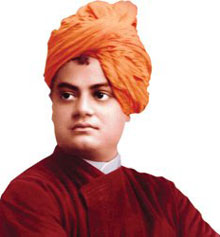
Ramakrishna Paramhansa (1836-1886) highlighted the essential unity of religions and the need to lead a spiritual life. He believed that the different religions of the world are only different ways to reach the same god.Ramakrishna Mission are based on ancient and traditional concepts amidst increasing westernization and modernization. The Mission was conceived and founded by swami Vivekananda in 1897, eleven years after the death of Ramkrishna. He considered and emphasized that Krishna, Hari , Rama, Christ, Allah are different names for the same God. Unlike the Arya Samaj, Ramakrishna Mission recognizes the utility and value of image worship in developing spiritual fervor and worship of the Eternal Omnipotent God.

Swami Vivekanand believed in the spirit of Vedanta and the essential unity and equality of all religions. He laid stress on the removal of religious superstitions, obscurantism, and outdated social customs. He tried to remove caste rigidities, and untouchability. He motivated the people to respect women while he himself worked for women’s upliftment and education. Vivekananda attached primary importance to the removal of ignorance among the people.

On 7 September 1875, HPB, Col. Olcott and W. Q. Judge, together with several others, formed a Society which they chose to call The Theosophical Society, for promulgating the ancient teachings of Theosophy, or the Wisdom concerning the Divine which had been the spiritual basis of other great movements of the past, such as Neoplatonism, Gnosticism, and the Mystery Schools of the classical world. The influence of Theosophical Society spread under Annie Beasant in 1893 who played an important role in India’s struggle for freedom. She and her associates advocated the revival and strengthening of the ancient religions of Hinduism, Zoroastrianism and Buddhism. The members of that his society believe that a special relationship can be established between a persons soul and God by comtemplation, prayer , revelations etc. The Society accepts the Hindu beliefs in reincarnationtion. Krma and draws inspiration from the philosophy of the Upanishads and Samkhya, Yoga and Vedanta school of though. It aims to work for universal Brotherhood of Humanity without distinction of race, creed., sex, caste or colour. The Society also seeks to investigate the unexplained laws of nature and the powers latent in man. The Theosophical Movement came to be allied with Hindu Renaissance.

Emergency Provisions of the Constitution

An emergency is a situation demanding immediate action.The emergency provisions under Indian constitution can be traced back to the British rule in India, when by Act of parliament crown established its sovereignty over company’s territories in India in 1861 . The Governor General under the provisions exercised wide powers both legislative and executive. He was also given power to legislate for emergencies.The Emergency Provisions are mentioned from Article 352 to Article 360.

Article 352: Proclamation of Emergency – due to external intrusion or war the President of India can declare a state of emergency through a Proclamation. This Article suggests that such a Proclamation can be revoked or a varied Proclamation can also be issued. However, the decision of the Cabinet ministers to issue such a proclamation must be sent to the President in written form prior to his issuance of the same. According to the Article, all such Proclamations should be presented to both the Houses of the Parliament. The Proclamations, if not accepted by a resolution, will be counted as ineffective after one month. If the Proclamation is not accepted after the passing of a second resolution, then it will become ineffective after the expiry of 6 months of the second resolution. It is also mentioned in the Article that not less than two-thirds of the members of any of the Parliamentary Houses should be required to pass a resolution. There are certain rules specified in this Article regarding the President revoking or issuing a varied Proclamation during Emergency.

Article 353: Effect of Proclamation of Emergency – this Article states that the Proclamation of Emergency includes extending the executive power of the union to the states in the form of directions. The Parliament, as per this Article, can confer the power to make laws, upon the officers or authorities of the Union.

Article 354: Application of provisions relating to distribution of revenues while a Proclamation of Emergency is in operation – provisions made under Articles 268 to 279 can be modified or exceptions can be made by the President of India by an Order while the Proclamation period of emergency is going on. Information about all such Orders must be conveyed to both the Houses of Parliament.

Article 355: Duty of the Union to protect States against external aggression and internal disturbance – this Article states the fact that the Union or Center is solely responsible for defending the various states from all types of violence and aggressions erupting from outside and disturbances occurring within the nation’s territory.

Article 356: Provisions in case of failure of constitutional machinery in States – the President of India can take charge of a state if the reports submitted to him by the Governor suggest that the government of the state has become incapable of exercising the Constitutional powers. The President is also subjected to exercise the powers of the government of such state by Proclamation. The Proclamation issued under such circumstances become ineffective after 6 months from the date of issuance, if not revoked during this time period. All such Proclamations have to be presented to both the Houses of Indian Parliament and will expire after two months. The Legislative powers of such state shall also be exercised by the Parliament. In the Houses of Parliament there are certain rules and regulations regarding the expiry of the Proclamation and the time period normally depends upon the fact whether it has been revoked earlier or not.

Article 357: Exercise of legislative powers under Proclamation issued under article 356 – the powers of the Legislature shall be exercised by the Parliament during emergency. The Parliament has the right to delegate Legislative powers to the President of India or any such authority. The President of India, after the Proclamation of Article 356, can make laws and shall have access to the consolidated fund during the time period when the House of the People is not in operation.

Article 358: Suspension of provisions of article 19 during emergencies – any provision under Article 19 will not be effective during emergency and the states can make law and undertake executive action. However, only those laws and executive actions containing recital related to emergency during the Proclamation of Emergency are effective as per the Article.

Article 359: Suspension of the enforcement of the rights conferred by Part III during emergencies – the President of India can suspend all ongoing proceedings in any court of the nation during emergencies by an Order. The President can also call upon all pending court proceedings in case of emergencies. All such orders declaring the suspension of court proceedings have to be submitted to both the Houses of Parliament.

Article 360: Provisions as to financial emergency – a declaration shall be made by the President of India through a Proclamation regarding the financial crisis of the nation if such situation arises. Such a Proclamation can be revoked and has to be presented in both the Houses of the Parliament. The Proclamation thus issued will become null and void after two months if the same is not approved through a resolution passed by the Houses of Parliament. In case the Houses are not in session the Article suggests certain specific guidelines regarding the Proclamation. This Article also includes provisions relating to the salary and allowance reduction of those who are employed with Union and state departments. A provision relating to money bills and other financial bills passed by the state Legislature is mentioned in the Article. This provision states that all such bills have to be considered by the President during financial instability.

[jetpack_subscription_form title=”Subscribe to APPSC Notes” subscribe_text=”Never Miss any APPSC important update!” subscribe_button=”Sign Me Up” show_subscribers_total=”1″]