Liberation War of Bangladesh


The Liberation War of Bangladesh in 1971 was the culmination of a 25-year tumultuous relationship between East and West Pakistan. The British failed to keep a united India as riots started between the Hindus, Sikhs and Muslims in 1946. The riots were so widespread that on August 14, 1947 India was portioned into two separate states.

Thus partition of the Indian subcontinent in 1947 divided British India into two independent countries of India and Pakistan. Pakistan was composed of two wings–East and West Pakistan. The two wings were united emotionally, but the marriage of the two wings was artificial as they had little in common other than religion. Their speech, thought, food habits, dress, living and generally speaking, their respective way of life, were totally different.

These differences, in course of time, gave rise to a tumultuous relationship that failed to keep the two wings united. The flawed relationship ended in a brutal war in 1971. As such, it is imperative to learn the background of the Liberation War of Bangladesh in 1971.

Causes of War

Language Movement–1952

Bangladeshis had one language and were proud of their ancestry; their language and literature were older than Urdu, the national language of West Pakistan, used by minority. Yet Mohammad Ali Jinnah stated in a public speech in March 1948 that Urdu would remain the state language of Pakistan. This infuriated all the non-Urdu speaking people of East Pakistan. On February 21, 1952, students and other civilians came out in the streets in protest but the police cracked down on the unarmed civilians. For East Pakistan, the language movement was the first stepping stone to independence.

Provincial Elections–1954

The first provincial elections were held in East Pakistan in 1954. In this election, Suhrawardy’s newly organized Awami League (Peoples’ League) allied with Fazlul Huq’s Peasants’ and Workers’ Party and a coalition of other Bangladeshi-dominated parties to form the United Front. In this election, the people of East Pakistan voted unilaterally for the alliance. As a result, the United Front had the maximum number of seats. Nurul Amin’s Muslim League, the dominant party in West Pakistan, won just 10 seats in East Pakistan; and thus, the Urdu-speaking people in East Pakistan’s ability to dictate policy was essentially finished. Fazlul Huq also became the chief minister of East Pakistan. The fine showing of the United Front convinced the politicians, civil servants, and the military at the center that they had to constrain Bangladeshi nationalism.

Ayub Khan’s Declaration of Martial Law–1958

In 1957 and 1958 governments rose and fell in Dhaka as the result of both instability in the assembly alignments and of intervention by the central government.43 As a sequel to the uncertainty, the deputy speaker of the house was killed in a riot. In such a dilapidated condition, president Mirza abrogated the constitution and declared martial law. General Ayub Khan remained as the chief martial law administrator. In 1962 Ayub Khan promulgated the new constitution of Pakistan, primarily giving enormous power to the president. Unfortunately, nothing addressed the concerns of East Bengal; and as such, anger, resentment and Bengali nationalism continued to grow.

Awami League’s Six-Point Program–1966

Before the resignation of Ayub Khan, several events took place in the political spectrum. Among those, the Awami League’s Six-Point Program was viewed as a foundational document in Bangladesh’s struggle for independence. This was not an instant memorandum developed within a short time. Rather, it was an outcome of Bangladeshi grievances accumulated for a long time. The initiation of the Six-Point Program started as a sequel to several events. However, the election of 1965 played an important role in formulating the program

National Election–1970

As Yahya Khan received the Six-Point Program from the Awami League, he opined that he was not in a position to implement them. He reiterated his prime task was to hold a general election in 1970 and hand over power at that point. However, in the December 1970 elections, the Awami League won 160 of 162 seats from East Pakistan. Bhutto’s Pakistan Peoples’ Party was successful in the west, winning 81 of 83 seats. Yahya Khan opened talks with both the leaders but failed to reach a consensus, and thus failed to hand over the power to an elected government.

India’s Perspective

There is no doubt that the creation of an independent Bangladesh was in India’s interest for many reasons.

  • Firstly, the Indo–Pakistan War in 1965 over Kashmir was one of the tipping points in this regard. India spent a huge amount of money to keep armed forces at a constant state of readiness along the border of her hostile neighbor. A warm relationship with an independent Bangladesh would reduce this big expenditure.
  • Secondly, India also wanted to start trading with East Pakistan for mutual benefit. But due to several political deadlocks, it was not a foregone conclusion.
  • Thirdly, Pakistani rulers created a problem for India by training and militarily equipping the Naga rebels of Assam (northeastern part of India), who claimed a portion of India to establish an independent Nagaland.
  • Apart from these issues, millions of East Pakistanis had religious, cultural, and linguistic ties with India. West Pakistani rulers also demeaned the Hindus of East Pakistan; whereas India was a Hindu-dominated country.

For all these reasons and more, India preferred an independent Bangladesh as a tonic to all these problems. The Indian government expected that if Bangladesh became independent, it would cooperate with India in a much wider form.

Course of War

On March 25, 1971, Yahya Khan, Bhutto and other members left for West Pakistan without giving any message or warning to the Awami League leaders. The West Pakistani military launched its sudden attack on March 25, 1917 at 11 p.m.it used automatic rifles, automatic weapons, bayonets and tanks. Yahya Khan appointed General Tikka Khan as the overall commander, and he was given 48 hours to suppress Bangladeshi nationalist movement. Within 34 hours, approximately 10,000 unarmed civilians were killed.

Until November 21, 1971, mostly Bangladeshi regular forces along with the Mukti Bahini operated in different parts of the country. Besides, there were few naval and air assets utilized to complement the war effort. However, on November 21, 1971 all the forces–Bangladesh Army, Navy, Air Force as well as the Mukti Bahini–launched their joint offensive against Pakistani military.

Pakistan launched the war against India on December 3, 1971, the UN took a more vigorous approach to the problem. While Soviet Union was supporting India, the U.S. and Chine stood by Pakistan. On December 5, 1971 Moscow vetoed a U.S. resolution urging the Security Council to call upon India and Pakistan to carry out a cease fire and military withdrawal.

The Russians exercised another veto within 24 hours when on December 7, 1971, the General Assembly voted 104 against 11 to call upon India and Pakistan to cease fire immediately and withdraw their forces to respective territories.

While the UN was debating, the war on the ground was going in favor of India. In the meantime, U.S. dispatched a naval task forces led by the nuclear-powered carrier Enterprise from U.S. seventh fleet. By the time the naval task force was close to Chittagong port of East Pakistan, all Pakistani forces surrendered unconditionally. If the UN espoused cease fire would be in effect, Bangladeshis’ hope for independence was not to be materialized.


Internet Protocol version 6

Internet Protocol version 6 (IPv6) is a version of the Internet Protocol (IP). It is designed to succeed the Internet Protocol version 4 (IPv4). While IPv4 allows 32 bits for an Internet Protocol address, and can therefore support 232 (4,294,967,296) addresses, IPv6 uses 128-bit addresses, so the new address space supports 2128 (approximately 340 undecillion or 3.4×1038) addresses. This expansion allows for many more devices and users on the internet as well as extra flexibility in allocating addresses and efficiency for routing traffic. It also eliminates the primary need for network address translation (NAT), which gained widespread deployment as an effort to alleviate IPv4 address exhaustion.
IPv6 also implements additional features not present in IPv4. It simplifies aspects of address assignment (stateless address autoconfiguration), network renumbering and router announcements when changing Internet connectivity providers.
The Internet Protocol Suite is the set of communications protocols used for the Internet and other similar networks.
The Internet Protocol (IP) is the principal communications protocol used for relaying datagrams (packets) across an internetwork using theInternet Protocol Suite. Responsible for routing packets across network boundaries, it is the primary protocol that establishes the Internet.

Read more

Origin of the Aryans


The Aryans came to India in several waves. The earliest wave is represented by the Rig Vedic people who appeared in the subcontinent in about 1500 BC. They came into conflict with the indigenous inhabitants called the Dravidians mentioned as Dasa or Dasyus in Rig Veda. The Rig Veda mentions the defeat of Sambara by Divodasa, who belonged to the Bharata clan. Possibly the Dasyus in the Rig Veda represent the original inhabitants of the country, and an Aryan chief who overpowered them was called Trasadvasyu. The Aryan chief was soft towards the Dasas, but strongly hostile to the Dasyus. The term Dasyuhatya, slaughter of the Dasyus, is repeatedly mentioned in the Rig Veda.

Some of the chief tribes of the period were Yadu, Turvasu, Druhyu, Anu Puru, Kuru, Panchala, Bharata and Tritsu. Among the inter-tribal conflicts the most important was the ‘Battle of the Ten Kings.’


Important points to remember:

  • The group of Indo-Europeans who moved to Persia and India are known to Aryans
  • The Aryans are the original inhabitants of Central Asia.
  • They arrived in India around 1500 BC, though there is an ongoing debate.
  • The region where the Aryans settled in India was called Sapta Sindhu (also referred to as the Brahmavarta)
  • The Aryans established themselves in India by defeating the natives whom they called Dasas or Dasyus
  • The period when the Aryans first settled in India, is known as Early Vedic Period (1500 BC to 1000 BC)
  • The Aryans spread to Indo-Gangetic plains in the later Vedic Period and this region came to be known as Aryavarta (1000 BC to 600 BC)
  • The Aryans were the first people in India to know the use of iron and brought horses along with them.


The Role of Sardar Patel in freedom movement

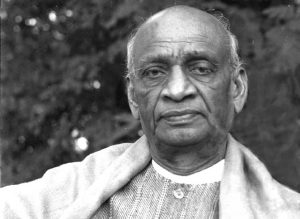
Sardar Vallabhbhai Patel

Sardar Vallabhbhai Patel handled effectively the integration of the princely states with his diplomatic skills and foresightedness. The problem of amalgamating 562 independent states with a democratic self-governing India was difficult and delicate. But it was essential to save India from balkanization, once the Paramountcy of British crown would lapse. Sardar Patel took charge of the states department in July 1947. He sensed the urgent and imperative need of the integration of princely states. He followed an iron handed policy. He made it clear that he did not recognize the right of any state to remain independent and in isolation, within India.

Sardar vallabhbhai Patel always raised his voice on several issues against exploitation and criticized the high-handedness of authority, the exploitative revenue policy of the Government and maladministration in the Princely states. He not only criticized the arbitrary policies of confiscation of movable and immovable properties, but also insisted on guarded regulations on land reforms and nationalization of key industries. His efforts to reform the Hindu religion and protect the people of other faiths reflected his longing for the right to religion. He encouraged the duly elected authority to bring restrictions through various legislative measures to freedom for all. Thus, his political value system was a fine synthesis of liberalism, conservatism and welfarism.

His vision of State was in tune with the pattern of his political values. In his concept, the State was founded and held together by a high sense of nationalism and patriotism. Individual liberty was to be in conformity with the provisions of the Constitution, to create a Nation-State, he pressed for the emancipation of backward communities and women and bring about Hindu- Muslim unity through the Gandhian constructive programme and skillfully utilised the higher castes for social integration and political mobilisation. Thus, he strengthened the plural basis of the nation-state by bringing electoral participation as effective political mobilisation. He saw a nation as ‘democratic in structure, nationalistic in foundation and welfarist in spirit and function’.

The process of the integration of the various states and the part played by Sardar in it, we realize the important role that Sardar had in the integration of the country. The states included Saurastra (including Junagadh) Hyderabad, Travancore, Cochin, Kashmir and other small states. Sardar’s role in each of these states was vital. The continuation of a divided and weak central government would in Patel’s mind, result in the wider fragmentation of India by encouraging more than 600 princely states towards independence. Between the months of December 1946 and January 1947, Patel worked with civil servant V.P. Menon on the latter’s suggestion for a separate dominion of Pakistan created out of Muslim-majority provinces. Communal violence in Bengal and Punjab in January and March 1947 further convinced Patel of the soundness of partition. Patel, a fierce critic of Jinnah’s demand that the Hindu-majority areas of Punjab and Bengal be included in a Muslim state, obtained the partition of those provinces, thus blocking any possibility of their inclusion in Pakistan. By August 15, 1947 all except Hyderabad, Junagarh and Kashmir acceded to India. He thereafter carried three fold processes of assimilation, centralization and unification of states. The states were amalgamated to form a union and that union was merged with the Union of India. He handled the Junagarh and Hyderabad crisis as a seasoned statesman. Nawab of Junagarh wanted to accede to Pakistan.The integration of the princely states thus acted as a synchronizing phenomenon and established a State of balance between chaos and segmentation and solidarity of the newly born Indian Union.


Kabir

Scholars differ about Kabir’s parentage, his family, the place of his birth, the time and place of his death etc. Instead of concentrating on various beliefs about Kabir’s life, the scholar deems it appropriate to side with the beliefs that are widely accepted. Scholars agree with the fact that Kabir belonged to the time of Sikandar Lodi and was a disciple of Swami Ramanand. Apropos this fact, most scholars believe that Kabir was born in 1455 and died in 1575.

At a very early stage, Kabir seems to have realised the fact that any kind of tenets, dogmas, precepts, principles and cult are counterproductive as far as true devotion is concerned as all these things breed dogmatism and fanaticism, which ultimately do not allow humankind to see the truth as it is. That is why, probably, many of his poems appear to urge to discard creeds and beliefs that embrace without any rational thinking.

Besides, Kabir appears to talk of the God that does not live at a holy shrine or a temple but within man. However, Kabir seems to say that ironically that is why people cannot notice God and oblivious of their real self they keep thronging at Kashi and Kaba:

How funny!

In the midst of water,

A fish thirsts for water,

The thing lies at home,

But searching for it,

In the woods, they roam.

Without self knowledge,

The world is false,

Be it Mathura or Kashi.

Here, Kabir seems to believe that as a fish lives in water and is surrounded by water, human beings live in God and are surrounded by God but they are still away from God because in vain they seek Him outside.

Kabir’s devotion looks to be not a blind devotion born of an impulse. Rather it seems to be an application of his belief in logic and evidence. The researcher holds that Kabir scoffs at the prevalent ritual of chanting God’s name on beads, despite the fact that in Hindu and Muslim religions chanting God’s name is believed to liberate one from suffering of this life.

This kind of egalitarianism, seems to be a need of the time when Kabir lived, as society was presumably divided into various strata of hierarchy and those belonging to the lower strata were believed to bear the brunt of inhumane discrimination, ostracism and untouchability. Thus, Kabir might have opposed differentiation made on the basis of castes not because he is a social reformer but because he is a rationalist in his thinking and a humanist at heart.

Kabir seems to believe that a person has to be careful of what he speaks and ensure that his words do not hurt anybody. It is observed that though means of communication have increased, communication between two people has decreased because people unnecessarily indulge in grumbling about and criticising others. Consequently nobody is ready to listen. If a person speaks words imbued with love, other people will love to hear him. On the other hand, if he keeps bitching about others, he will alienate a lot of people and lose his friends. As a result, a person will be left alone and the loneliness will tear him asunder. Thus, being polite in our speech is very much essential for social solidarity.

ARUNACHAL PRADESH : CLIMATE

Climate varies across Arunachal in proportion to the altitude, the weather of Arunachal Pradesh differs though overall it has a pleasant and temperate climate.The high altitude areas near the Himalayas observe tundra (or alpine) climate, while those at lesser elevation enjoy a temperate weather.

The sea-level areas bordering Assam experience sub-tropical climate. The climate of Arunachal is governed by the Himalayan system and the altitudinal differences. It is situated in the Eastern Himalayan province.

The entire territory forms a complex hill system with varying elevations ranging from 50m in the foot-hills and gradually ascending to about 7,000m, traversed throughout by a number of rivers and rivulets.

In the Upper Himalayas, where elevation is really high, alpine or tundra type of weather is experienced while temperate climate is enjoyed in the middle Himalayas.

However, in areas at sea level base and far removed from the Himalayan range, people find the climate to be humid and sub-tropical. These plains have warm summers and pleasant winters. It receives heavy showers of about 200-400 cm between the months of May and September.

Warm summer, cold winter

The summer season begins in March and extends till August in the plains. Between June and August the temperature sometimes goes up to 40 to 42 degree Celsius.

During summers, the maximum temperature recorded in the foothills is 40 degree Celsius. However, the average temperature during winters varies from 15 to 21 degree Celsius.

Winters officially arrive in November and prevail till the month of February. The high altitude regions become very cold during winters.

Arunachal Pradesh is best to visit during the months of October-March. The higher regions witness snowfall during winter. The snowfall and the alpine climate of Arunachal Pradesh largely draw tourists from the different parts of the world to tour the upper reaches of Arunachal Pradesh.

Unique location of Arunachal

The north-eastern state shares its borders with only two Indian states – Assam in the south and Nagaland in the south-east. As regards other countries, Myanmar lies to its east, Bhutan to its west, and Tibet to its north.

The extended Himalayan ranges in the eastern part separates the state from China. Further, the ranges widen near Nagaland, and form a frontier among India and Burma in Changlang and Tirap district.

Its topography is well-defined by mountain ranges and sub-mountainous terrains, beside the northern parts. Rivers, like Brahmaputra, Kameng, Siang, Lohit, Subansiri, Tirap, etc. flow through its expanse, and provide fresh waters to the dwellers.

Climate variations a blessing

The extreme variation of climate within Arunachal has been more a blessing than disadvantage because the micro level agro climatic conditions are congenial for growth of diverse crops that suit the different climatic requirement in the same season in different agro-ecological zones.

Heterogeneous climate and soil conditions of the state are an advantage. There is a vast area suitable for temperate fruits of both high and low chilling requirements. But the major areas of the state are fit for tropical and subtropical fruits.

Apple is a major fruit of temperate areas which is a unique aspect of Arunachal among the north eastern states. On the other hand, mandarin, sweet orange and pineapple among others grow abundantly in the mid and foothill areas. The outstanding strength of the state is that its varied agro ecological zones and the farming system approach (FSA) supports growth of a large variety of crops in every season.


Montagu-Chelmsford Reforms and Rowalt act

    • Provincial LC enlarged. More elected members
    • Dyarchy
      • Some subjects were reserved and remained under the direct control of the Governor; others such as education, public health and local self-government were called transferred subjects and were to be controlled by the ministers responsible to the legislature.
    • At the centre, there were two houses of legislature.
    • Response of nationalists
      • INC condemned the reforms as disappointing and unsatisfactory
      • Some others , led by Surendranath Banerjea, were in favour of accepting the government proposals. They left the Congress at this time and founded the Indian Liberal Federation
    • Evaluation
      • The  governor could overrule the ministers on any grounds that he considered special
      • The legislature had virtually no control over the Governor-General and his Executive Council.

The central government had unrestricted control over the provincial governments

Rowlatt Act

  • March 1919
  • It authorized the Government to imprison any person without trial and conviction in a court of law.


IMPORTANT NOTE

SSC MASTERS will come out with more such initiatives to provide a level-playing field to aspirants who do not need or have access to coaching and provide strategic competitive advantage to our followers in every aspect of SSC preparation and to stand true to its endeavour of becoming ‘A One stop Destination for SSC preparation’. Please Subscribe ssc masters for regular update for ssc cgl preparation. Leave you reviews about SSC Masters in the comment box below and suggestions for ssc masters for innovative SSC CGL preparation.

Formation of Linguistic States:–

Formation of Linguistic States:–

India is a land of many languages, each with its distinct script, grammar, vocabulary and literary tradition. In 1917, the Congress Party had committed itself to the creation of linguistic provinces in a Free India. After Congress’s Nagpur Session in 1920, the principle was extended and formalized with the creation of provincial Congress Committee by linguistic zones.

The linguistic reorganization of the Congress was encouraged and supported by Mahatma Gandhi. After the bitter partition on the basis of religion the then PM Nehru was apprehensive of dividing country further on the basis of language.

Dhar commission

During that time some Marathi speaking Congress members raised the pitches for separate Maharashtra State. Following this demand, other language speaking people too demands a separate state for them. Hence, Constituent Assembly in 1948 appointed the Linguistic Provinces Commission, headed by Justice S.K. Dhar, to enquire into the desirability of linguistic provinces.

The Dhar Commission advised against this at that time reason being it might threaten national unity and also be administratively inconvenient.

JVP Committee

After some time the clamor for linguistic states again got momentum. To appease the vocal votaries of linguistic states, the congress appoints a committee (JVP) in December 1948 consisting of Nehru, Sardar Patel and Pattabhi Sitaramayya to examine the question afresh. This JVP Committee revoked the seal of approval that the congress has once put on the principle of linguistic provinces.

The demands for separate state on the linguistic basis didn’t subside. There were renewed movements aimed at linguistic autonomy in 1948, 1949. There was the campaign for Samyukta Karnataka, uniting Kannada speaking spread across the states of Madras, Mysore, Bombay, Hyderabad, Samyukta Maharashtra, Maha Gujarat movement. In case of Punjab, struggle brought together both the factors language and religion (Sikh).

Andhra Movement

After Independence, the speakers of Telugu asked the congress to implement its old resolution in favour of linguistic states.

On 19 October 1952, a popular freedom fighter, Potti Sriramulu undertook a fast unto death over the demand for a separate Andhra and expired after fifty-eight days. After his death people were agitated and it was followed by rioting, demonstrations, hartals and violence all over Andhra. The Vishalandhra movement (as the movement for a separate Andhra was called) turned violent. Finally, the then PM, Nehru announced the formation of a separate Andhra State in December 1952.

State Reorganization Commission

The formation of Andhra Pradesh spurred the struggle for making of other states on linguistic lines in other parts of the country.

Hence Nehru appointed in August 1953 the states Reorganisation Commission (SRC) with justice Fazl Ali, K.M. Panikkar and Hridaynath Kunzru as members, to examine “objectively and dispassionately” the entire question of the reorganization of the states of the Union. The SRC submitted its report in October 1955. It recognized for the most part on the linguistic principle and recommended redrawing of state boundaries on that basis.

The then government accepted the SRC’s recommendations. Finally, the states Reorganization Act was passed by parliament in November 1956. It provided for fourteen states and six centrally administered territories. SRC opposed the splitting of Bombay & Punjab.

Case of Bombay

Therefore, the strongest reaction against SRC’s report came from Maharashtra, where widespread rioting took place. To fulfill their demand of separate Marathi speaking people’s state, there was the broad based Samyukta Maharashtra Samiti and on the other hand in Bombay state, there was Maha Gujarat Janata Parishad led the movement for Gujarati people.

After on years of the reorganization of states Act, the government finally agreed in May 1960, the bifurcate the state of Bombay into Maharashtra, Gujarat with Bombay city being included in Maharashtra and Ahmedabad being made the capital of Gujarat.

Case of Punjab

The other state where an exception was made to the linguistic principle was Punjab. In 1956, the state of PEPSU had been merged with Punjab, which remained a trilingual state having three language speakers-Punjab, Hindu and Pahari within its border. In the Punjabi speaking part of the state, there was a strong demand for carving out a separate Punjabi Suba (Punjabi Speaking State). This demand got communal overtones. The Akali Dal led Sikh Communalists, while the Jan Sangh, led Hindu communalists.

SRC had rejected the demands in Punjab, as it would not solve either the language or the communal problem of Punjab. Finally in 1966, Indira Gandhi agreed to the division of Punjab into two Punjabi and Hindi speaking status of Punjab and Haryana, with the Pahari speaking district of Kangra and a port of the Hoshiarpur district being merged with HP.

Finally, after more than ten years of continuous strife and popular struggles, the linguistic reorganization of India was largely completed

The Guptas : Extent of empire; development of language and Literature, art St architecture during the Gupta period.

The Gupta Empire stretched across northern, central and parts of southern India between c. 320 and 550 CE. The period is noted for its achievements in the arts, architecture, sciences, religion, and philosophy. Chandragupta I (320 – 335 CE) started a rapid expansion of the Gupta Empire and soon established himself as the first sovereign ruler of the empire. It marked the end of 500 hundred years of domination of the provincial powers and resulting disquiet that began with the fall of the Mauryas. Even more importantly, it began a period of overall prosperity and growth that continued for the next two and half centuries which came to be known as a “Golden Age” in India’s history. But the seed of the empire was sown at least two generations earlier than this when Srigupta, then only a regional monarch, set off the glory days of this mighty dynasty in circa 240 CE.

GUPTA PERIOD – EARLY DAYS TO THE ZENITH

Not much is known about the early days of this Gupta dynasty. The travel diaries and writings of Buddhist monks who frequented this part of the world are the most trustworthy sources of information we have about those days. The travelogues of Fa Hien (Faxian, circa 337 – 422 CE), Hiuen Tsang (Xuanzang, 602 – 664 CE) and Yijing (I Tsing, 635 – 713 CE) prove to be invaluable in this respect. The Gupta Empire during the rule of Srigupta (circa 240 – 280 CE) comprised only Magadha and probably a part of Bengal too. Like the Mauryas and other Magadha kings who preceded him, Srigupta ruled from Pataliputra, close to modern day Patna. Srigupta was succeeded to the throne by his son Ghatotkacha (circa 280 – 319 CE).

CHANDRAGUPTA I

From the Kushans, the Gupta kings learned the benefit of maintaining a cavalry and Chandragupta I, son of Ghatotkacha, made effective use of his strong army. Through his marriage with Licchhavi Princess Kumaradevi, Chandragupta I received the ownership of rich mines full of iron ore adjacent to his kingdom. Metallurgy was already at an advanced stage and forged iron was not only used to meet the internal demands, but also became a valuable trade commodity. The territorial heads ruling over various parts of India could not counter the superior armed forces of Chandragupta I and had to surrender before him. It is conjectured that at the end of his reign, the boundary of the Gupta Empire already extended to Allahabad.

SAMUDRAGUPTA

Samudragupta (circa 335 – 375 CE), Chandragupta I’s son who ascended the throne next, was a military genius and he continued the growth of the kingdom. After conquering the remainder of North India, Samudragupta turned his eyes to South India and added a portion of it to his empire by the end of his Southern Campaign. It is generally believed that during his time the Gupta Empire spanned from the Himalayas in north to the mouth of Krishna and Godavari rivers in the South, from Balkh, Afghanistan in the west to the Brahmaputra River in the east.

Samudragupta was very attentive to rajdharma (duties of a king) and took special care to follow Kautilya’s (350 – 275 BCE) Arthashastra (an economic, social and political treatise that has clear instructions about how a monarchy should be governed) closely. He donated large sums of money for various philanthropic purposes, including the promotion of education. Besides being a courageous king and able administrator, he was a poet and musician. The large number of gold coins circulated by him showcases his multifaceted talent. An inscription, probably commissioned by subsequent Gupta kings, known as the Allahabad Pillar is most eloquent about his humane qualities. Samudragupta also believed in promoting goodwill among various religious communities. He gave, for example, Meghavarna, king of Ceylon, permission and support for the construction of a monastery in Bodh Gaya.

CHANDRAGUPTA II

A short struggle for power appears to have ensued after the reign of Samudragupta. His eldest son Ramagupta became the next Gupta king. This was noted by 7th century CE Sanskrit author Banbhatta in his biographical work, Harshacharita. What followed next forms a part of Sanskrit poet and playwright Visakh Dutta’s drama DeviChandra Guptam. As the story goes, Ramagupta was soon overcome by a Scythian king of Mathura. But the Scythian king, besides the kingdom itself, was interested in Queen Dhruvadevi who was also a renowned scholar. To maintain peace Ramagupta gave up Dhruvadevi to his opponent. It is then Ramagupta’s younger brother Chandragupta II with a few of his close aides went to meet the enemy in disguise. He rescued Dhruvadevi and assassinated the Scythian king. Dhruvadevi publicly condemned her husband for his behaviour. Eventually, Ramagupta was killed by Chandragupta II who also married Dhruvadevi sometime later.

Like Samudragupta, Chandragupta II (circa 380 – 414 CE) was a benevolent king, able leader and skilled administrator. By defeating the satrap of Saurashtra, he further expanded his kingdom to the coastline of the Arabian Sea. His courageous pursuits earned him the title of Vikramaditya. To rule the vast empire more efficiently, Chandragupta II founded his second capital in Ujjain. He also took care to strengthen the navy. The seaports of Tamralipta and Sopara consequently became busy hubs of maritime trade. He was a great patron of art and culture too. Some of the greatest scholars of the day including the navaratna (nine gems) graced his court. Numerous charitable institutions, orphanages and hospitals benefitted from his generosity. Rest houses for travellers were set up by the road side. The Gupta Empire reached its pinnacle during this time and unprecedented progress marked all areas of life.

POLITICS & ADMINISTRATION

Great tact and foresight were shown in the governance of the vast empire. The efficiency of their martial system was well known. The large kingdom was divided into smaller pradesha (provinces) and administrative heads were appointed to take care of them. The kings maintained discipline and transparency in the bureaucratic process. Criminal law was mild, capital punishment was unheard of and judicial torture was not practised. Fa Hien called the cities of Mathura and Pataliputra as picturesque with the latter being described as a city of flowers. People could move around freely. Law and order reigned and, according to Fa Hien, incidents of theft and burglary were rare.

The following also speaks volumes about the prudence of the Gupta kings. Samudragupta acquired a far greater part of southern India than he cared to incorporate into his empire. Therefore, in quite a few cases, he returned the kingdom to the original kings and was satisfied only with collecting taxes from them. He reckoned that the great distance between that part of the country and his capital Pataliputra would hinder the process of good governance.

SOCIO-ECONOMIC CONDITIONS

People led a simple life. Commodities were affordable and all round prosperity ensured that their requirements were met easily. They preferred vegetarianism and shunned alcoholic beverages. Gold and silver coins were issued in great numbers which is a general indicative of the health of the economy. Trade and commerce flourished both within the country and outside. Silk, cotton, spices, medicine, priceless gemstones, pearl, precious metal and steel were exported by sea. Highly evolved steelcraft led everyone to a belief that Indian iron was not subject to corrosion. The 7 m (23 ft) high Iron Pillar in Qutub complex, Delhi, built around 402 CE, is a testimony to this fact. Trade relations with Middle East improved. Ivory, tortoise shell etc. from Africa, silk and some medicinal plants from China and the Far East were high on the list of imports. Food, grain, spices, salt, gems and gold bullion were primary commodities of inland trade.

RELIGION

Gupta kings knew that the well-being of the empire lie in maintaining a cordial relationship between the various communities. They were devout Vaishnava (Hindus who worship the Supreme Creator as Vishnu) themselves, yet that did not prevent them from being tolerant towards the believers of Buddhism and Jainism. Buddhist monasteries received liberal donations. Yijing observed how the Gupta kings erected inns and rest houses for Buddhist monks and other pilgrims. As a pre-eminent site of education and cultural exchange Nalanda prospered under their patronage. Jainism flourished in northern Bengal, Gorakhpur, Udayagiri and Gujarat. Several Jain establishments existed across the empire and Jain councils were a regular occurrence.

LITERATURE, SCIENCES & EDUCATION

Sanskrit once again attained the status of a lingua franca and managed to scale even greater heights than before. Poet and playwright Kalidasa created such epics as Abhijnanasakuntalam, Malavikagnimitram, Raghuvansha and Kumarsambhaba. Harishena, a renowned poet, panegyrist and flutist, composed Allahabad Prasasti, Sudraka wrote Mricchakatika, Vishakhadatta created Mudrarakshasa and Vishnusharma penned Panchatantra. Vararuchi, Baudhayana, Ishwar Krishna and Bhartrihari contributed to both Sanskrit and Prakrit linguistics, philosophy and science.

Varahamihira wrote Brihatsamhita and also contributed to the fields of astronomy and astrology. Genius mathematician and astronomer Aryabhata wrote Surya Siddhanta which covered several aspects of geometry, trigonometry and cosmology. Shanku devoted himself to creating texts about Geography. Dhanvantri’s discoveries helped the Indian medicinal system of ayurveda become more refined and efficient. Doctors were skilled in surgical practices and inoculation against contagious diseases was performed. Even today, Dhanvantri’s birth anniversary is celebrated on Dhanteras, two days before Diwali. This intellectual surge was not confined to the courts or among the royalty. People were encouraged to learn the nuances of Sanskrit literature, oratory, intellectual debate, music and painting. Several educational institutions were set up and the existing ones received continuous support.

ART, ARCHITECTURE & CULTURE

What philosopher and historian Ananda Coomaraswamy said in The Arts & Crafts of India & Ceylone, about the art of the region must be remembered here,

The Hindus do not regard the religious, aesthetic, and scientific standpoints as necessarily conflicting, and in all their finest work, whether musical, literary, or plastic, these points of view, nowadays so sharply distinguished, are inseparably united.

The finest examples of painting, sculpture and architecture of the period can be found in Ajanta, Ellora, Sarnath, Mathura, Anuradhapura and Sigiriya. The basic tenets of Shilpa Shasrta (Treatise on Art) were followed everywhere including in town planning. Stone studded golden stairways, iron pillars (The iron pillar of Dhar is twice the size of Delhi’s Iron Pillar), intricately designed gold coins, jewellery and metal sculptures speak volumes about the skills of the metalsmiths. Carved ivories, wood and lac-work, brocades and embroidered textile also thrived. Practicing vocal music, dance and seven types of musical instruments including veena (an Indian musical stringed instrument), flute and mridangam (drum) were a norm rather than exception. These were regularly performed in temples as a token of devotion. In classic Indian style, artists and litterateurs were encouraged to meditate on the imagery within and capture its essence in their creations. As Agni Purana suggests, “O thou Lord of all gods, teach me in dreams how to carry out all the work I have in my mind.”

DECLINE OF THE EMPIRE

After the demise of his father Chandragupta II, Kumaragupta I (circa 415 – 455 CE) ruled over the vast empire with skill and ability. He was able to maintain peace and even fend off strong challenges from a tribe known as Pushyamitra. He was helped by his able son Skandagupta (455 – 467 CE) who was the last of the sovereign rulers of the Gupta Dynasty. He also succeeded in preventing the invasion of the Huns (Hephthalites). Skandagupta was a great scholar and wise ruler. For the well being of the denizens he carried out several construction works including the rebuilding of a dam on Sudarshan Lake, Gujarat. But these were the last of the glory days of the empire.

After Skandagupta’s death the dynasty became embroiled with domestic conflicts. The rulers lacked the capabilities of the earlier emperors to rule over such a large kingdom. This resulted in a decline in law and order. They were continuously plagued by the attacks of the Huns and other foreign powers. This put a dent in the economic well-being of the empire. On top of this, the kings remained more occupied with self-indulgence than in preparing to meet with the challenges of their enemies. The inept ministers and administrative heads also followed suit. Notably, after the defeat and capture of Mihirakula, one of the most important Hephthalite emperors of the time, Gupta King Baladitya set him free on the advice of his ministers. The Huns came back to haunt the empire later and finally drew the curtains on this illustrious empire in circa 550. The following lines of King Sudraka’s Mricchakatika (The Little Clay Cart) aptly sum up the rise and fall in the fortune of the Gupta Dynasty.


25.01.18 Arunachal Pradesh(APPSC) Current Affairs

NORTH-EASTERN STATES

  • Railways to invest Rs 48,000 crore to boost Northeast infrastructure


  • The Railways will invest nearly Rs 48,000 crore in the northeast to boost infrastructure and development in the region.


  • Tracks up to Imphal will come up by 2020. the Railways could not expedite work in Meghalaya as local councils are unwilling to part with their land. the Railways has acquired land stretching up to 17 km for train connectivity to Kohima in Nagaland.


  • Doubling of tracks in Assam has been sanctioned up to Lumding via Goalpara and the NFR is working to complete the task by 2020. 

    INTERNATIONAL


    • Japan’s Development Loan Assistance to India for an amount of Yen 45 billion


    • The Government of Japan has committed JICA Official Development Assistance loan for an amount of Yen 45 billion (Rs.2587 crore approx.) for the project.


    • The Notes in this regard were exchanged between Mr. S. Selvakumar, Joint Secretary, Department of Economic Affairs, Ministry of Finance, Government of India and H.E. Mr. Kenji Hiramatsu, Ambassador of Japan to India on Japanese official development assistance loan for Bengaluru Water Supply and Sewerage Project (Phase 3) (I).


    • This Project will provide residents of Bruhat Bengaluru Mahanagar Palike (BBMP) area especially in 110 villages with safe and stable water supply and sewerage services by carrying-out construction of water treatment plant and sewage treatment plants thereby improving living conditions of the residents as well as the investment environment in the concerned areas in BBMP in the State of Karnataka.


    • India and Japan have had a long and fruitful history of bilateral development cooperation since 1958. In the last few years, the economic cooperation between India and Japan has steadily progressed.


    • This further consolidates and strengthens the Strategic and Global Partnership between India and Japan.


    NATIONAL


    ·        Eighth National Voters Day is observed on 25th January


    • The Election Commission of India celebrated the 8th National Voters’ Dayacross the country on 25th January for enhanced participation of citizens in the electoral process.
    • The National level function was held in New Delhi.
    • President Ram Nath Kovind gave away awards for best electoral practices to District Collectors, Superintendents of Police and other functionaries involved in election management.


    Gk bit – National Voters Day


    • National Voters’ Day or Rashtriya Matdata Diwasis celebrated on January 25 every year. The significance of National Voters’ Day is to encourage more young voters to take part in the political process. It is a day to celebrate the right to vote and vibrant democracy of India.


    • The day was first celebrated in 2011 to mark Election Commission’s Foundation Day. This will be eighth National Voters’ Day (NVD) and will be used to spread awareness among voters regarding effective participation in the electoral process.


    • ECI (Election Commission of India) is permanent and independent constitutional body established directly by Constitution of India to ensure fair and fair elections in the country. It is multi-member body and currently has three members including Chief Election Commissioner (CEC).


    • Bharat Parv to be held at Red Fort on Republic Day


    • Cultural extravaganza Bharat Parvwill be held at the Red Fort in Delhi as part of the Republic Day celebrations.
    • The prime objective of the event is to promote rich cultural diversity of the country, generate a patriotic mood and to ensure wider participation of the general public.
    • The Bharat Parv event includes a display of Republic Day Parade Tableaux, Performances by Armed Forces Bands, Cultural Performances from a different region.


    ·        Union Government To Infuse Over Rs88 Thousand Crore In 20 PSB


    • The Union Government announced 88,139 crore rupees capital infusion in20 public sector banks, PSBs, during the current fiscal ending 31st March to boost lending and revive growth.
    • IDBI Bank will get the most- Rs10,610 crore followed by State Bank of India 8,800 crore rupees.
    • The 20 banks that will receive the capital infusion during this phase include Bank of India, UCO Bank, and Punjab National Bank.
    • In October last year, the government had announced over two lakh crore rupees bank recapitalization plan spread over spread over two financial years  2017-18 and 2018-19.


    • India to host 16th International Energy Forum meet


    • The 16th International Energy Forum (IEF) Ministerial meeting will be held in New Delhi on April 10 to 12.


    • It will be hosted by Government of India in New Delhi and co-hosted by the Government of China and South Korea.


    • Representatives from 92 countries will be participating in the conference, including 72 member countries of IEF and 20 guest countries.


    • India had last hosted the IEF ministerial conference in 1996.


    ·        Union Government to increase number of AMRIT pharmacy stores 4 times

    • The Ministry of Health and Family Welfare announced to increase the number of AMRIT pharmacy stores by four times by end of 2018 from the existing 111 outlets in a bid to make low-cost medicines more accessible. So far, 52 lakh patients have been benefited by buying discounted drugs (60 to 90% less than market price) from AMRIT (Affordable medicine and reliable implants for treatment) stores and have saved over Rs. 267 crores.
    • The AMRIT (Affordable medicine and reliable implants for treatment) scheme aims to reduce expenditure incurred by patients on the treatment of cancer.
    • Under it, retail outlets in the name of AMRIT pharmacy are opened to sell drugs for cancer and heart diseases at highly discounted rates on market rates.


    • SARAS PT1N makes its maiden flight


    • SARAS PT1N (14 seater) designed and developed by CSIR-National Aerospace Laboratories (CSIR-NAL), a frontline aerospace research laboratory, has successfully made its maiden flight.


    • Union Minister for Science & Technology, Dr. Harsh Vardhan, has congratulated the scientists of CSIR-NAL and other agencies involved in the successful maiden flight.


    • The aircraft took off at about 11 a.m from HAL airport and flew for about 40 minutes at the maximum height of 8500 ft at the speed of 145 knots.


    • The aircraft programme is named after Indian crane Saras. It was first conceptualised in the 1990s to establish short-haul civil aviation market. The original design of the plane included maximum take-off weight of 6,100kg and a maximum payload of 1,232kg.


    • Rapid Reporting System for the Scheme for Adolescent Girls launched


    • Secretary, Ministry of Women and Child Development, Shri Rakesh Srivastava launched the Phase -1 i.e. the beneficiary module of the Rapid Reporting System for the Scheme for Adolescent Girls – a web based on line monitoring for the Scheme for Adolescent Girls in New Delhi.


    • This Portal has been developed in collaboration with National Informatics Centre (NIC).


Exit mobile version